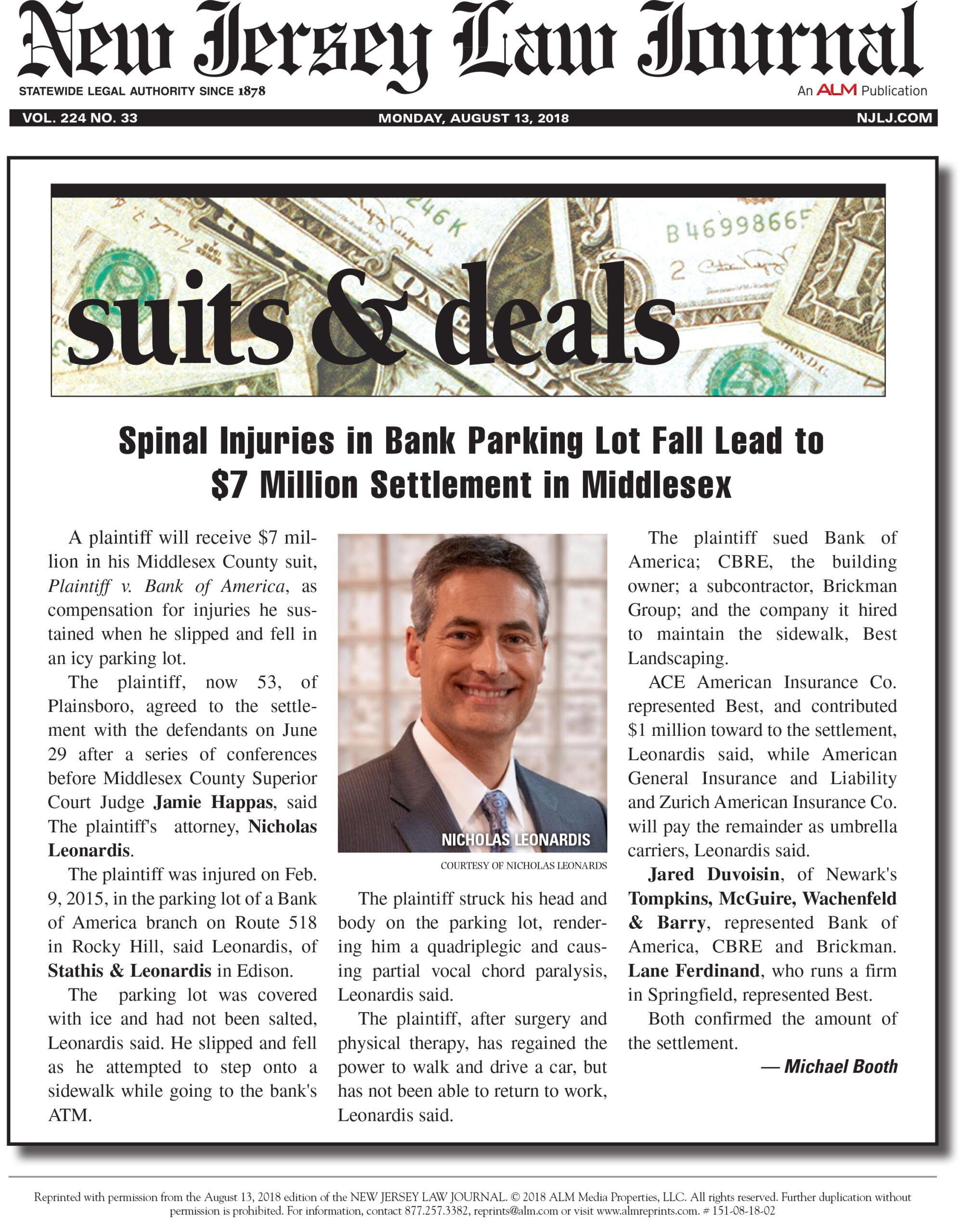
Whether you look forward to the cold weather each year or prefer a warmer climate, New Jersey is no stranger to snow. While the snow can be a beautiful sight, it can be dangerous when it comes to venturing out. As a result, snow & ice accidents happen often, and the results can be severe. It’s important to understand who is responsible for the removal and management of snow and ice on sidewalks, walkways, and in parking lots. If you have sustained an injury as a result, the following blog explores what you must know as the victim of a snow & ice accident in New Jersey, and what to do in the event of an injury.
Who Is Responsible for Snow & Ice Accidents?
In Middlesex County and across the state of New Jersey, property owners have a responsibility to maintain their premises and keep walkways reasonably safe, including in winter weather.
However, it’s important to understand that liability is not automatically assigned in New Jersey, but is based on a number of factors. This includes where the fall occurred, the timeline of the winter weather that caused the accident, and whether or not the property owner had a reasonable time to respond to the hazard on their premises.
When a Property or Business Owner May Be Liable
In general, the duty to maintain reasonably safe premises could apply to:
- Commercial property owners
- Residential property owners (in some circumstances)
- Landlords or property management companies
- Businesses with adjacent sidewalks
- Homeowners’ associations
As such, an individual or business may face responsibility for an accident on their premises if:
- They failed to remove snow or ice within a reasonable timeframe
- They ignored refreezing conditions
- They failed to adequately salt, sand, or treat the ice on the property
- They did not clear entrances, ramps, or curbs
Understanding Municipal Cleanup Timeframes
It’s important to understand that property owners are not expected to begin shoveling sidewalks immediately after the snow stops. Many towns and boroughs across Middlesex County have ordinances that allow for a reasonable period for property owners to remove snow from their premises following a winter weather event. As such, when your fall occurred in conjunction with the timing of the weather event can impact liability.
Common Winter Conditions That Lead to Snow and Ice Injuries
While snow and ice accidents may seem obvious, this is not always the case. Unfortunately, many injuries caused by winter weather conditions are the result of black ice or refreezing conditions. These hazards can impact a number of high-traffic pedestrian areas, like walkways, parking lots, sidewalks, and ramps. These conditions may be made worse by fluctuating temperatures throughout the day.
Exterior and Parking Lot Hazards
- Black ice on walkways, parking lots, or traffic lanes
- Snow-covered potholes or sidewalk defects
- Sloped or uneven pavement obscured by snow
- Ice accumulation
- Refreezing after partial melting
- Inadequate outdoor lighting
Building Entrances and Walkway Hazards
- Untreated ice near doors and entryways
- Wet floor mats
- Slippery indoor floor conditions from snow tracking
- Failure to maintain high-traffic pedestrian areas
- Lack of salt or sand on icy conditions
- Failure to address refreezing caused by poor drainage
How to Fulfill the Burden of Proof After a Snow and Ice Accident in New Jersey
If your injury was caused by another party’s negligence, you may be entitled to recover compensation. However, it’s important to understand that, as the injured party, it is your responsibility to prove negligence. As such, you must meet the burden of proof, called the preponderance of the evidence, as required by law to show that the property owner’s actions were negligent.
Steps to Take Immediately After the Accident
- Seek immediate medical treatment, even if you feel okay or symptoms seem minor
- Photograph the conditions before the property owner clears it
- Report the injuries to the property owner or store manager
- Request an incident report and obtain a copy before leaving the premises
- Gather the names and contact information of witnesses
- Preserve the shoes and clothing worn at the time of the fall
Evidence That May Help Support Your Claim
- Surveillance or security camera footage
- Maintenance and snow-removal records
- Photos and videos from the time of the accident
- Witness testimony
- Medical records
- Weather records
How Timing Affects Snow and Ice Liability in New Jersey
As mentioned, the state provides property owners with a reasonable time to clear snow and ice from their premises following a winter weather event. As such, the court must consider when the fall happened when determining liability.
Why “Storm in Progress” May Matter
- Property owners may not be required to remedy snowy or icy conditions while a winter weather event is actively occurring
- Liability will depend on whether the storm ended, how much time elapsed, and if refreezing should have been anticipated
Constructive Notice and Opportunity to Correct Conditions
A private property owner or business may face liability if:
- The hazard existed for a considerable period
- The condition was previously reported and ignored
- The owner knew or should have known about the hazard
- Reasonable efforts were not made to keep the premises safe
How Long Do I Have to File a Claim?
If you wish to take legal action, you will have to make sure to file your personal injury claim on time. This deadline is known as a statute of limitations. In New Jersey, the statute of limitations is generally two years. This means that if you fail to file your claim within two years of the date of the accident, you will likely lose your opportunity to recover the compensation you deserve.
What NOT to Do After a Snow and Ice Accident
While taking the necessary steps after a snow or ice accident in New Jersey is critical to protecting your rights, it’s also important to understand what actions you should avoid. Unfortunately, certain behaviors may hinder your ability to recover the compensation you deserve.
Actions That May Harm Your Claim
- Leaving the scene of the accident without reporting the injury or informing the property owner
- Delaying medical care
- Ignoring medical advice
- Posting about your injury or the accident on social media
- Speaking with insurers without legal guidance
- Discarding evidence or medical records
Contact Our Experienced New Jersey Personal Injury Firm
If you were injured in a snow or ice accident in or around Middlesex County, it’s in your best interest to connect with an experienced attorney with Stathis & Leonardis, PLLC, as soon as possible. Our team will examine your unique circumstances to determine the best course of action to help you fight for the justice and compensation you deserve. Contact us today to learn more.